Women's Circles: Why “gentle” isn't always healing
I'm not against gentleness. There's nothing wrong with soft, soothing spaces. They have their place. They can be beautiful and nourishing. But somewhere along the way, the wellness world made gentleness synonymous with safety. And discomfort synonymous with harm. If something feels difficult, if it asks us to touch what's raw, we're told we're feeling too much. That we need to regulate. To calm down. To make it gentler.
That's not true.
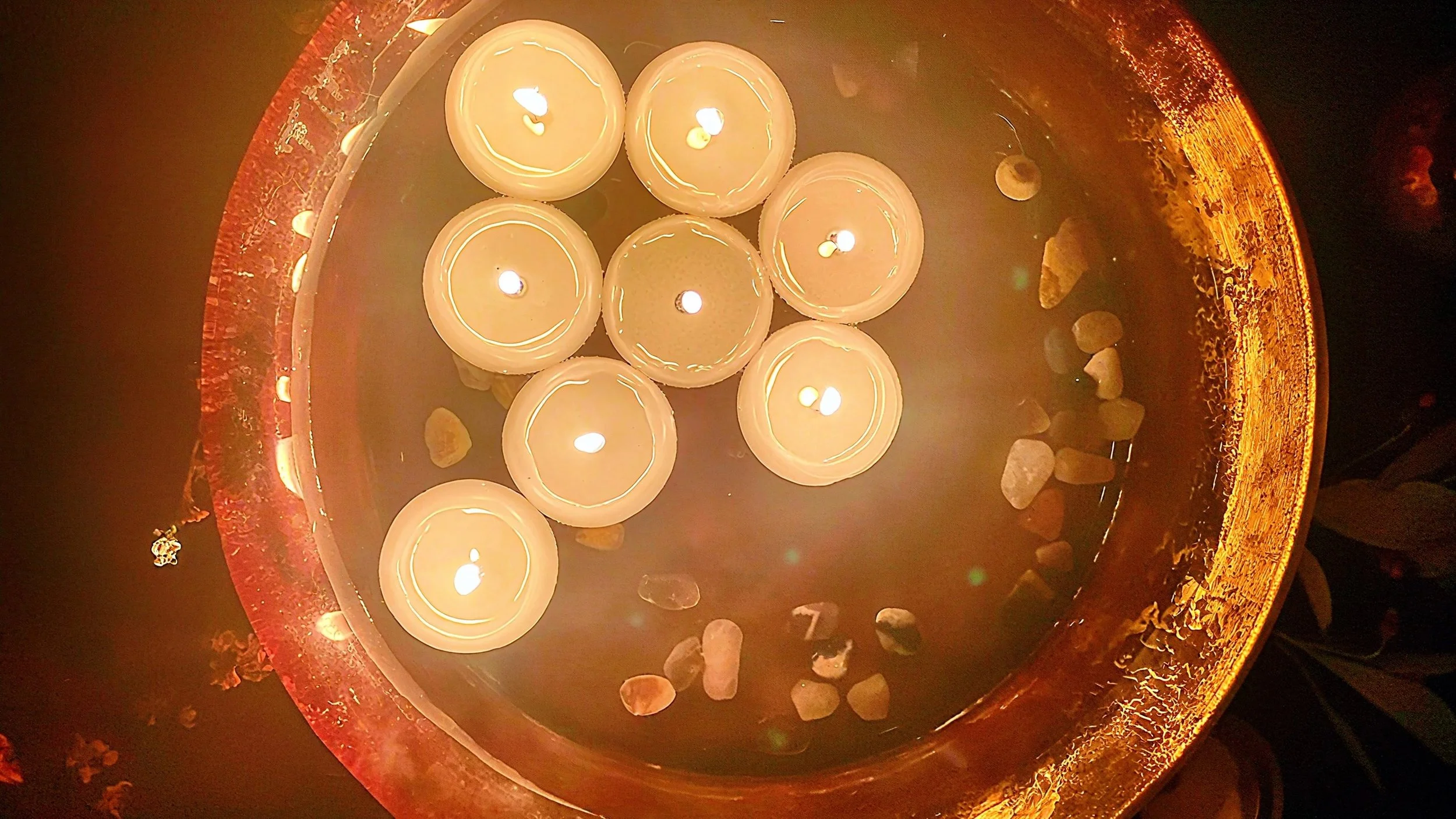
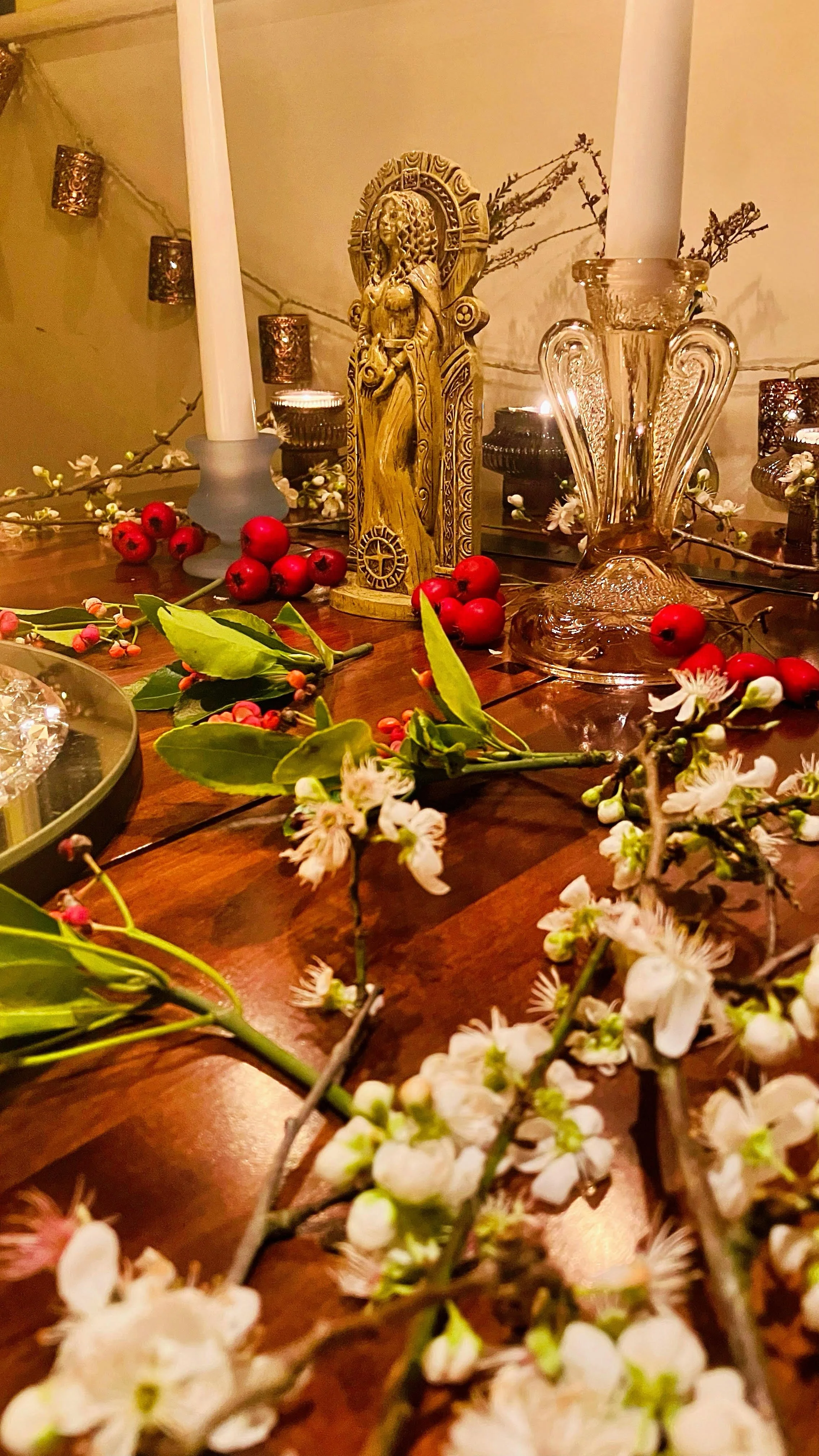
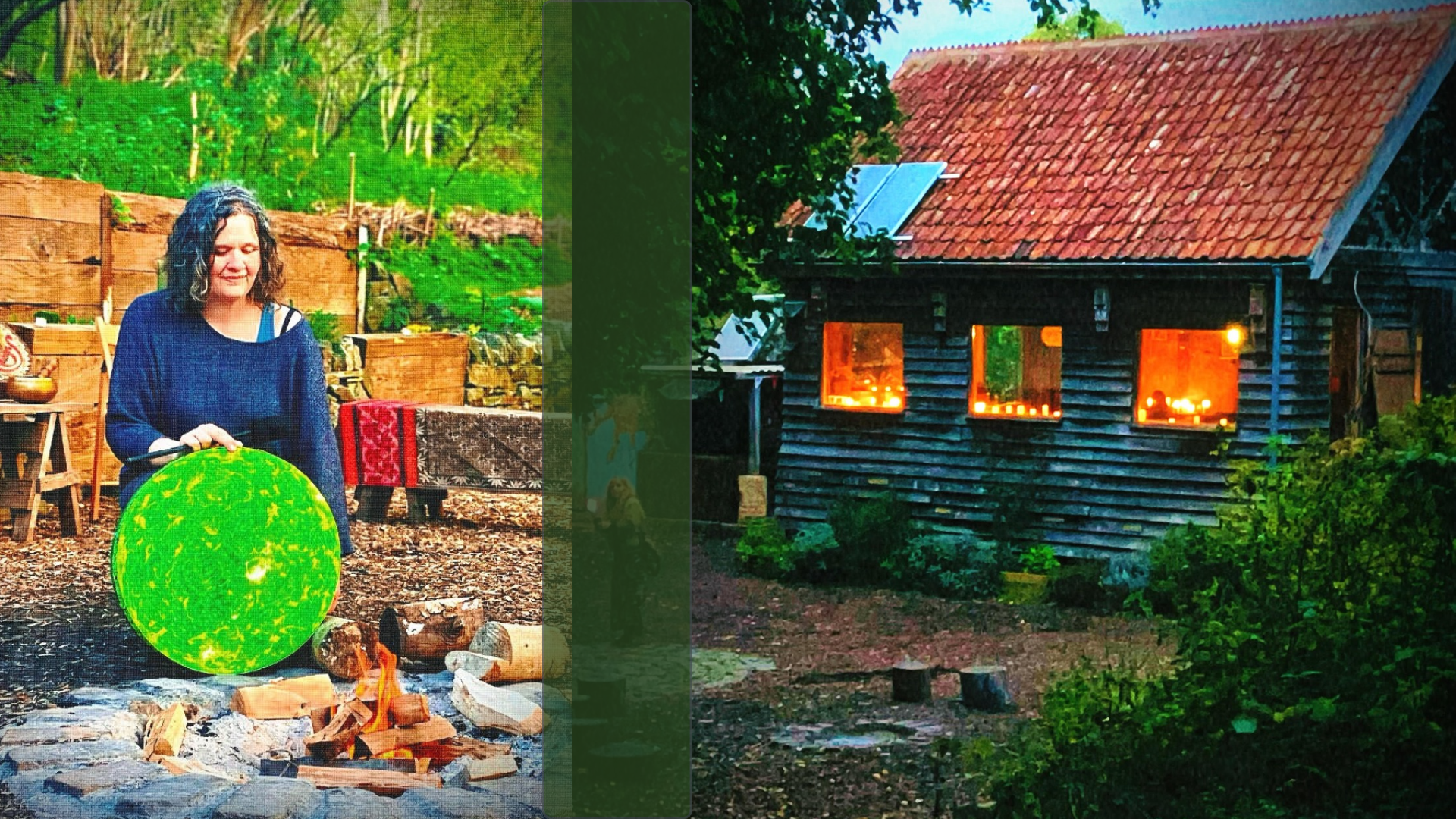
A fire-scrying ritual inspired by the ancient celts at one of the women’s circles I hold
You see the constant talk about regulating your nervous system everywhere now. As if anger is a problem to be solved. As if grief needs to be calmed. As if the only good emotion is a regulated one.
For women, this hits differently. Many of us were raised to be good girls. To be nice. To not make a fuss. To swallow our anger, dim our joy, hide our grief. We spent decades masking ourselves into acceptability.
“I felt safe and held and great to sit in circle with fellow wise women who are not afraid of deep soul work”
And now, with many of us at midlife, when we're finally ready to feel it all, when the dam is breaking and decades of unexpressed emotion are demanding to be heard, we're told again to calm down. To regulate. To be spiritual about it. As if our feelings are somehow unenlightened.
Sometimes you don't need to regulate. Sometimes you need to feel. To let the anger move through your body. To give the grief sound. To shake with the fear that's been stuck in your shoulders for decades. To finally, finally let yourself be as big and loud and raw as you actually are.
Regulation is of course an essential part of healing. But in many spaces in the wellbeing world, we've made it the only goal. We've turned feeling into a problem that needs fixing.
Understanding your window of tolerance and gently expanding it is where healing takes place. At the edge; though not so far that you're overwhelmed, but far enough that you're actually touching what needs to be felt. This how we grow capacity. That's how we heal. And that needs structure. It needs ground. It needs a container strong enough to hold you while you meet your wounded parts.
The Edge were healing happens
When I say my circles are trauma-informed, I don't mean we tiptoe around difficult feelings.
I mean we understand how the nervous system works. We know that healing happens when you can touch the wound and still feel your feet on the ground.
When you can access the grief without drowning in it.
We move slowly. We resource first. We establish what safety feels like in your body before we ask you to feel anything else.
We work in layers. We don't go straight to the deepest wound. We build capacity. We practice touching something hard and then coming back to breath, back to sensation, back to the here and now.
We gently expand your window of tolerance so you can feel more without being overwhelmed.
This is how women grow their capacity to feel. Not by regulating away the difficult emotions, but by learning they can touch them and come back. Touch and return. Feel and resource.
“The circle felt deep, organic and raw to me. I felt vulnerable - yet safe within the group. Due to the guidance of Ruth and her wisdom, I felt comfortable enough to share my vulnerability.”
Vulnerable yet safe. That's the paradox. And that's what a proper container makes possible.
An online women's circle membership
A women's circle that runs online, all year. Live together every month, drum journeys and somatic meditations for your own time, ceremony at the four fire festivals, and a community to come back to in between.
Wherever you are, whenever you can come to it.
Founding members come in at £25 a month and keep that rate for as long as they stay. Opening later this year.
The Role of Ritual
Some people think ritual is just aesthetic. Candles and altars and pretty things to make it feel special.
I used to think that too. Until I experienced the power of real ritual for the first time at a transpersonal psychology residential with ReVision. There was a shadow ritual. A ritual to grief our childhood, and a few more! I still think about those rituals today. They're still unfolding in my life, years later because that is what ritual does when it's done well. It doesn't just create a moment; instead, it stays with you long after you've left the room.
But in many spaces, ritual has become performative. I've been in circles where ritual feels like being that child back at Sunday School who hasn't learned her catechism. Where ritual is something outside of you. Something you have to get right. Something you have to know the rules of before you can partake.
That's not what ritual is. Not for me. When I create ritual, it's not a script. It's not something I'm imposing. It's an invitation into your journey. It comes from within you. It unfolds from you, not from me.
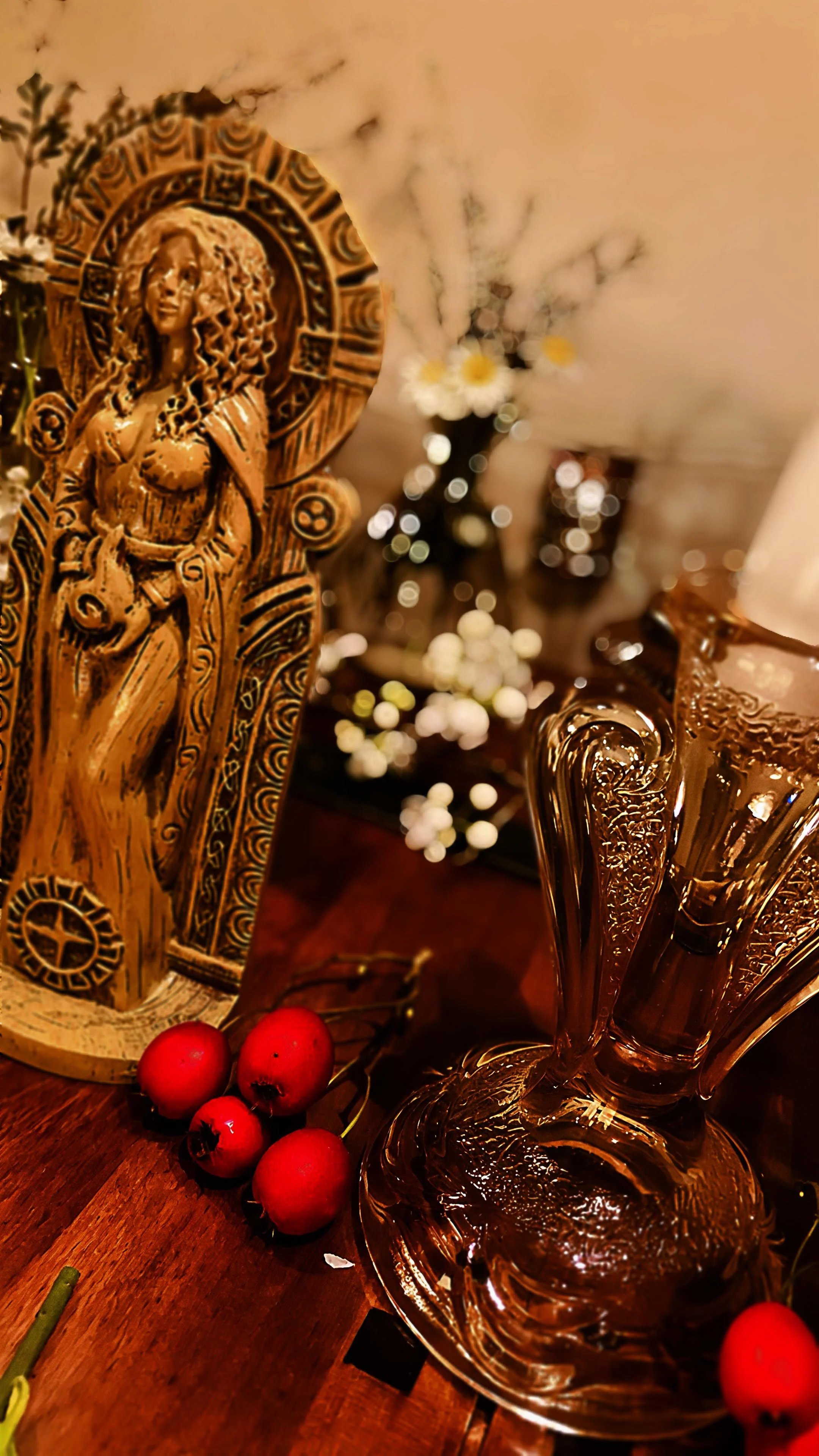
That's what ritual does in my circles. It signals transition.
It tells your nervous system: we're entering sacred space now.
Different rules apply here. You can let down the guard you carry in the world. You don't need to perform. You just need to show up.
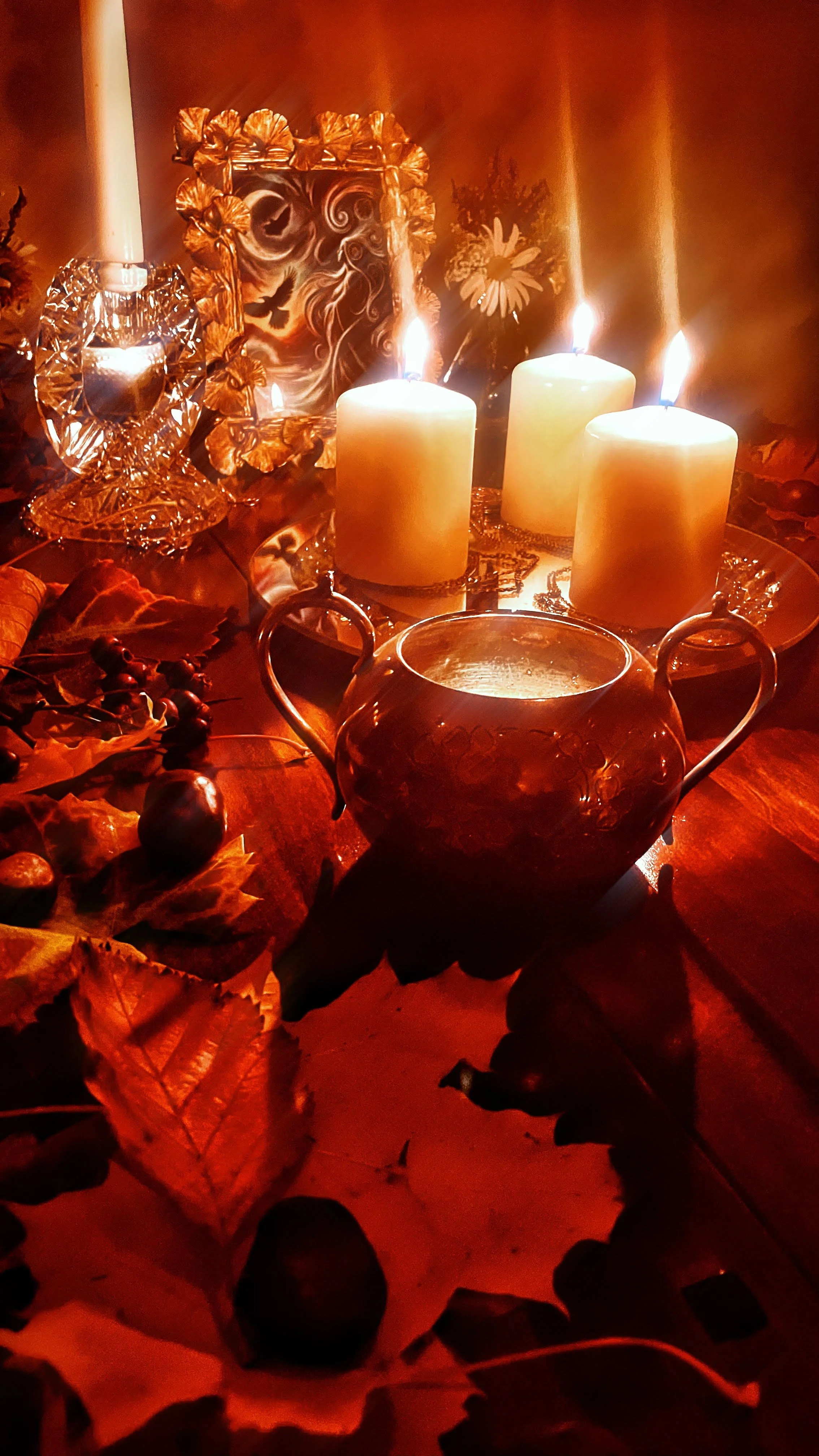
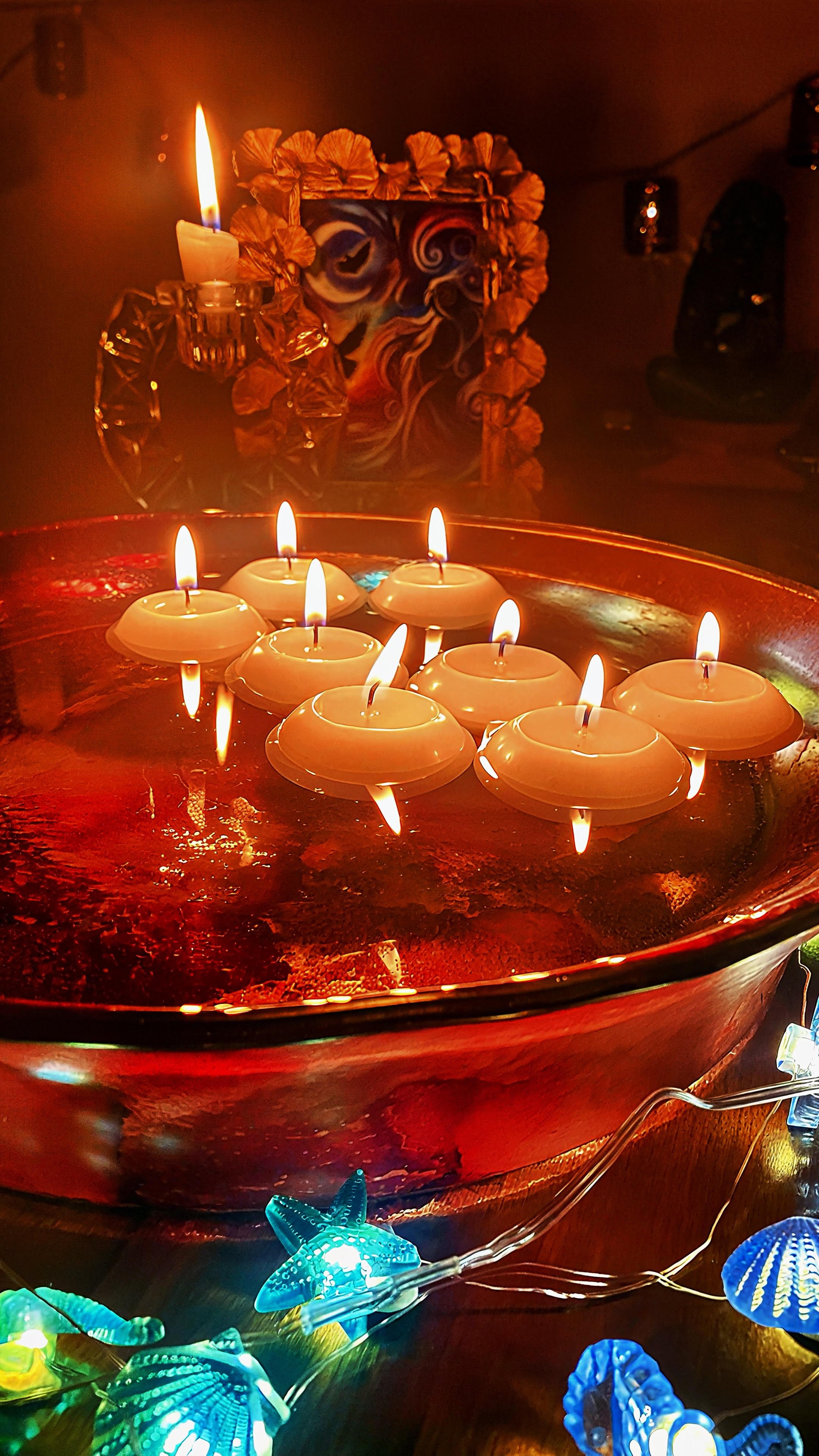
The space matters. The sensory experience matters. Not because it's nice to look at, but because your nervous system reads environment.
When the space feels tended, your body can relax. When there's beauty and care in the details, it tells you: this is a place where you matter. Where your healing matters.
“You created a beautiful space Ruth. I appreciated how well thought out each session was, and enjoyed learning more about folklore and the Morrighan along the way. You have a real gift for making people feel welcome as they are and gently guiding some very deep work.””
The Power of being witnessed
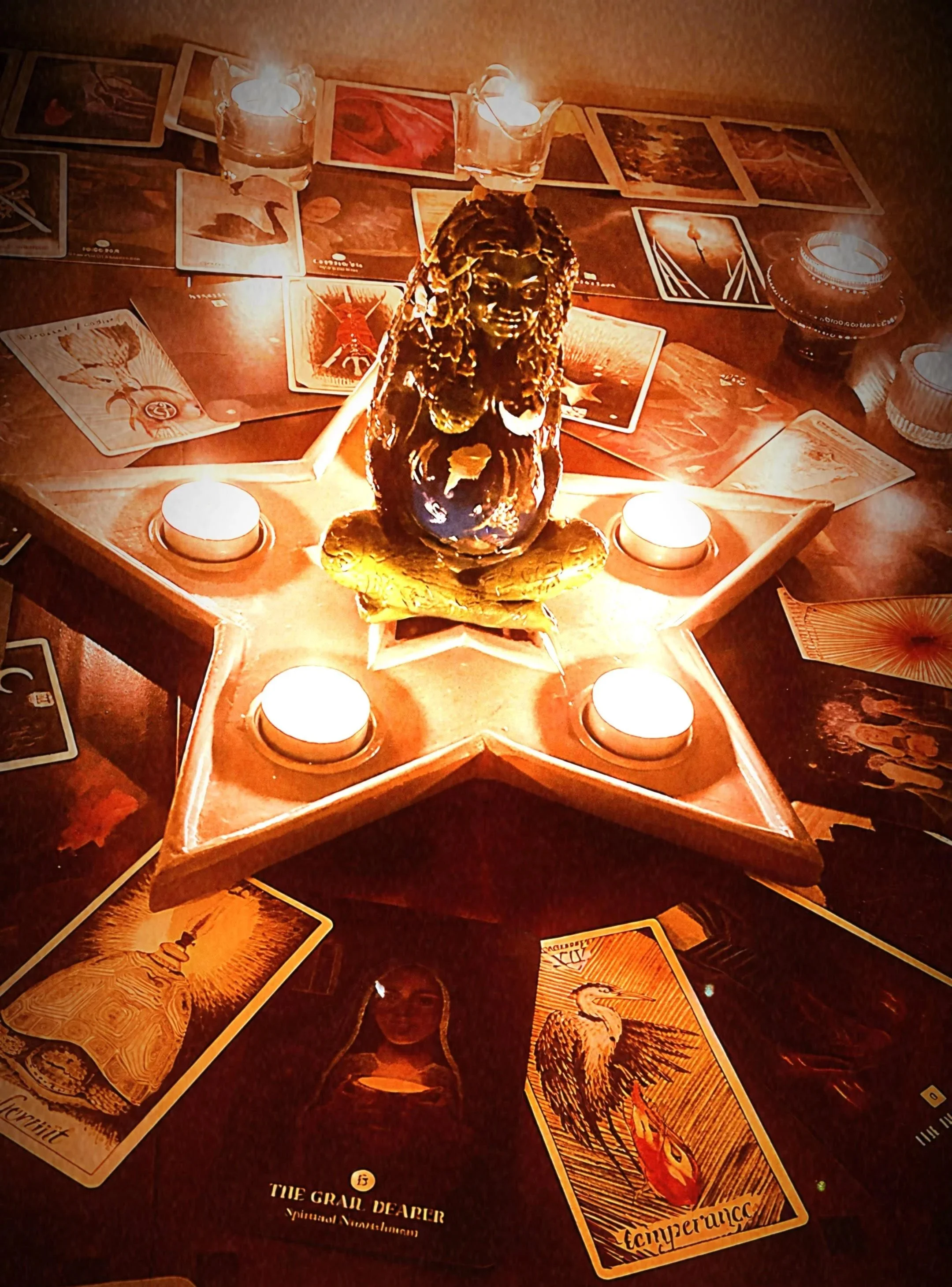
There's something that happens when women come together in circle that is ancient and irreplaceable.
Something your nervous system knows even if your mind doesn't.
It's the experience of being witnessed.
Of knowing you're not alone in your pain.
Of hearing another woman voice her grief and realising yours isn't too much either.
“The chance to share with others of a like mind was a rare, very special privilege.”
When everyone in the circle has consented to this depth of work, when everyone understands we're here to feel not just to talk, something shifts. The group becomes a field. A kind of collective holding that your nervous system responds to in a way that's completely unique.
“The Morrighan circle also developed my sense that we are all doing our best - and these incidents aren’t something that I need to blame people for or allow to grow toxic, but that I have control over what I do with them and how I break a cycle.”
This is what women have always done. Gathered. Witnessed. Held each other while the deep work unfolded. It's ancient. It's in our bones.
How to know if you’re being truly held in Circle
I'll never forget the first time I felt truly seen.
It was about ten years ago. I'd got funding to join a leadership academy, back when I was still a senior manager. It was completely experiential, nothing like what I'd expected.
There was a coach there and he saw me. Really saw me. It was the first time since I'd left Northern Ireland at eighteen that anyone had witnessed what it must have been like to grow up there. What it must have been like to carry all of that and still want to help people.
I burst into tears because something was finally being acknowledged. Something I'd been holding for almost twenty years.
And I felt my body listening.
That's the thing about being held. Your body knows. It knows immediately whether it's safe to let go or whether it needs to brace. And most of us, especially women, have spent a lifetime bracing.
When I'm in a space where I'm not held, my body tells me. My jaw tightens. My pelvic floor lifts. My womb space constricts. It's an immediate response. The body saying: not here. Not safe. Keep everything locked down.
When I'm held, the opposite happens. My belly softens. My jaw releases. My body settles into something ancient and familiar. Like it's remembering what it always knew.
Women recognise this. They might not have the words for it yet, but they feel it the moment they walk into a space. They know within seconds whether they can let down or whether they need to stay armoured.
In my circles, one of the first things I name is this: many of us here are caretakers. We were trained in that role from childhood. So when a woman is feeling grief, we don't rush to fix it. We don't fill the silence. We witness her. We let her feel it. And she knows, if she needs support, she can ask. She can raise her hand. There's space to step back if she needs it. But mostly what happens is simply this: she feels it, and we let her.
And there's no awkwardness. No discomfort from the women around her. Just a quiet recognition. This is normal. This is what we do here.
“I felt held, safe and powerful to work through whatever was coming up for me in each session and it is incredibly powerful at removing any feeling of ‘judgement’ or comparison - I found this particularly supportive”
The most beautiful thing I've witnessed in circle is what happens after the grief. When a woman has truly felt her sadness, when it's moved through her body and been witnessed by the women around her, there's a space that opens. And into that space comes joy. Or laughter. Or a kind of wild relief. Because when we actually feel the hard stuff, we make room for everything else.

The Heroine’s Journey
Joseph Campbell mapped the hero's journey - the great mythic arc of departure, initiation, return. But it was Maureen Murdock who challenged that model and asked: what about women?
Murdock was actually a student of Campbell's, and she'd been working with women in therapy who simply didn't fit his template. Women's journeys weren't linear. They spiralled. They circled back. They went deep into darkness and came back up again, changed.
So Murdock developed her own map. And when she showed it to Campbell in 1983, he said: "Women don't need to make the journey. In the whole mythological tradition the woman is there. All she has to do is realise that she's the place that people are trying to get to."
What he meant was that in mythology, the feminine is the destination.
The hero journeys outward seeking something - and that something is often the goddess, the sacred feminine, the wholeness he's lost. In Campbell's view, women were already there. Already whole. Already the thing the hero was searching for.
But Murdock disagreed. And rightly so. Because while that might be true mythologically, psychologically, contemporary women are on a journey. Especially women who grew up in a patriarchal culture, who learned to suppress their feminine in order to succeed in a masculine world. Those women need to journey back. Back to themselves. Back to the feminine. Back to wholeness.
Sound familiar?
Because that's exactly what happens in circle. We're not fixing something that's broken. We're remembering what we already are. We're coming home.
“This was the first time doing this work over a longer period and I really noticed the shifts over time. It’s helped me to continue noticing them too.”
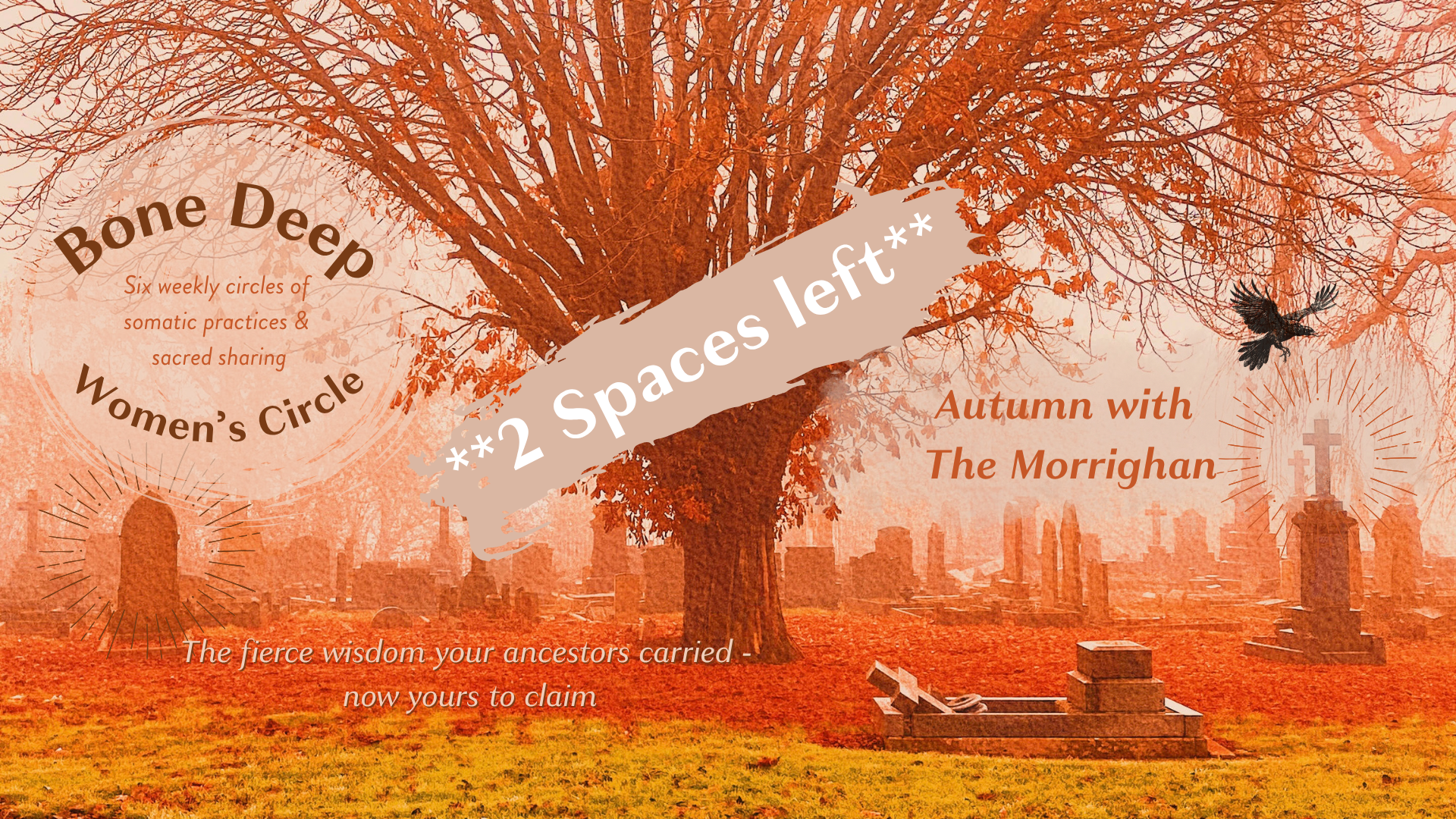
Celtic wisdom already knew this. It's not about climbing a mountain and reaching the top. It's about moving with the seasons, the cycles, the turning of the year. That's why we sit with Brigid at Imbolc and tend to ourselves - because Imbolc is about the first stirring, the tiny green shoot in the dark earth, not the full bloom. That's why we go into the shadow with the Morrighan in autumn, because that's the season for it, because nature is going dark, because we are nature.
Spiritual bypassing is everywhere. And it's dangerous

There's a massive problem in the wellness space and we need to talk about.
We've built an entire culture around transcending our emotions. Around rising above. Around finding the lesson, the gift, the silver lining.
Books like Eckhart Tolle's The Power of Now have created a whole movement around the idea that if you could just stay present enough, mindful enough, you'd bypass all that messy feeling stuff entirely.
And it's dangerous.
Because it shames the very emotions that need to be felt.
It tells women that their anger is a problem. That their grief is something to move through quickly. That rage and darkness and sorrow are signs they haven't done enough inner work. When actually, those feelings are the work.
In the autumn Morrighan circle, we worked with the Irish keening tradition. Keening is ancient. It's women voicing their grief out loud, together, without apology. No prettifying it. No making it palatable. Just raw, primal grief given sound.
But we didn't just throw ourselves into that. We resourced first. We worked with the drum - its steady rhythm giving the nervous system something to hold onto while the grief moved through. And there were always options. If voicing grief felt like too much, you could close your eyes and experience your own journey with the drum.
And then we moved. We shook. We danced. We let the body release everything that had come up. And the space that opened after... it was extraordinary. Because when grief has been truly felt, truly voiced, truly witnessed, there's room. Room for joy. Room for laughter. Room for the kind of aliveness that's been buried under years of holding it all in.
“I had some realisations that I carry a significant mother wound... and that I’ve been holding some stories my whole life that are probably attributable to just one or two comments or experiences when I was a child. These were likely just throwaways for the perpetrators but they have stuck with me. Circle developed my sense that we are all doing our best and these incidents aren’t something that I need to blame people for or allow to grow toxic, but that I have control over what I do with them and how I break a cycle.”
This is what can happen when you don't spiritually bypass. When you actually feel the thing instead of transcending it. The story loses its power. The wound begins to move. And you may find that you don’t feel as stuck anymore.
Who these Women’s Circles are for
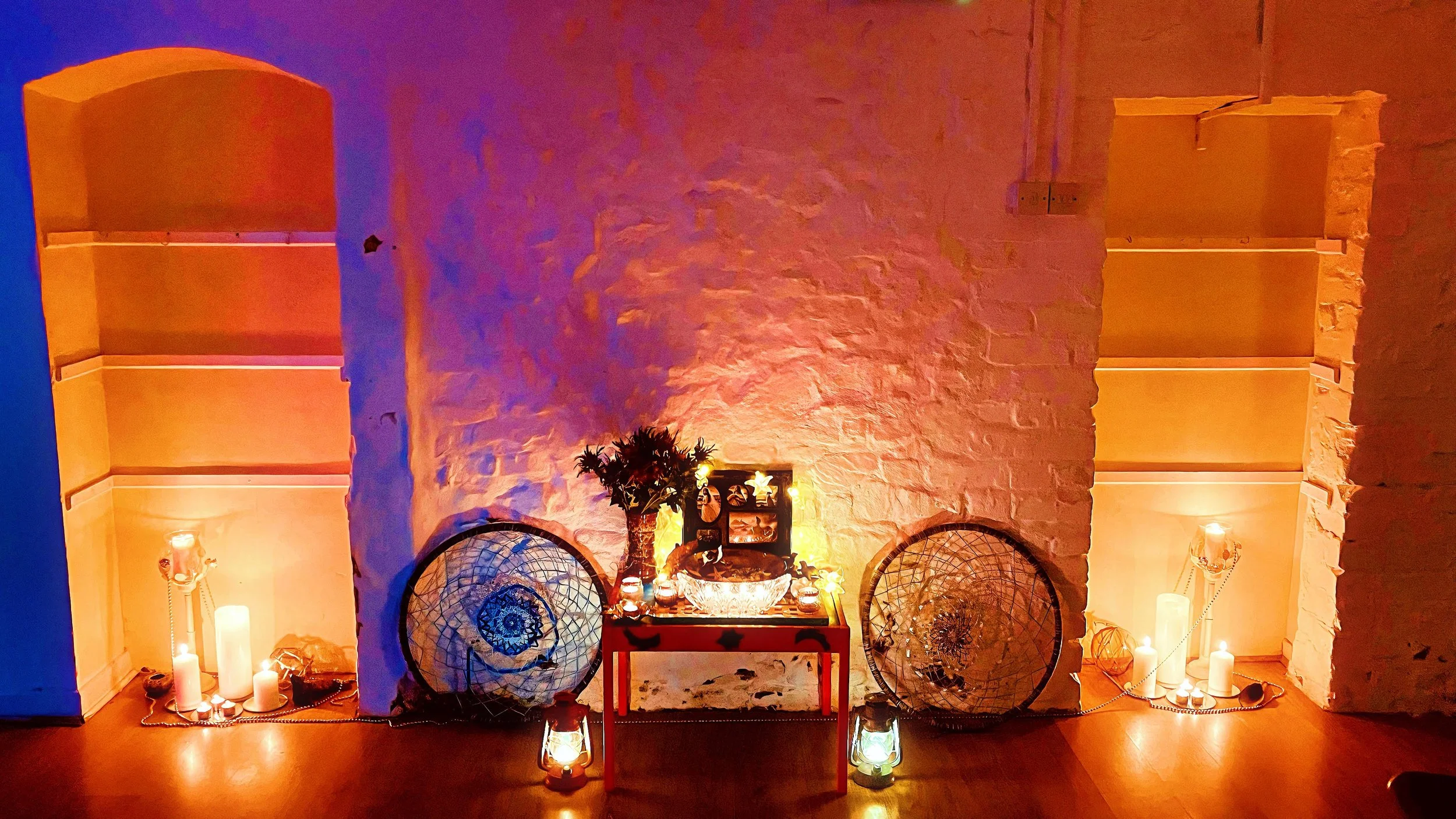
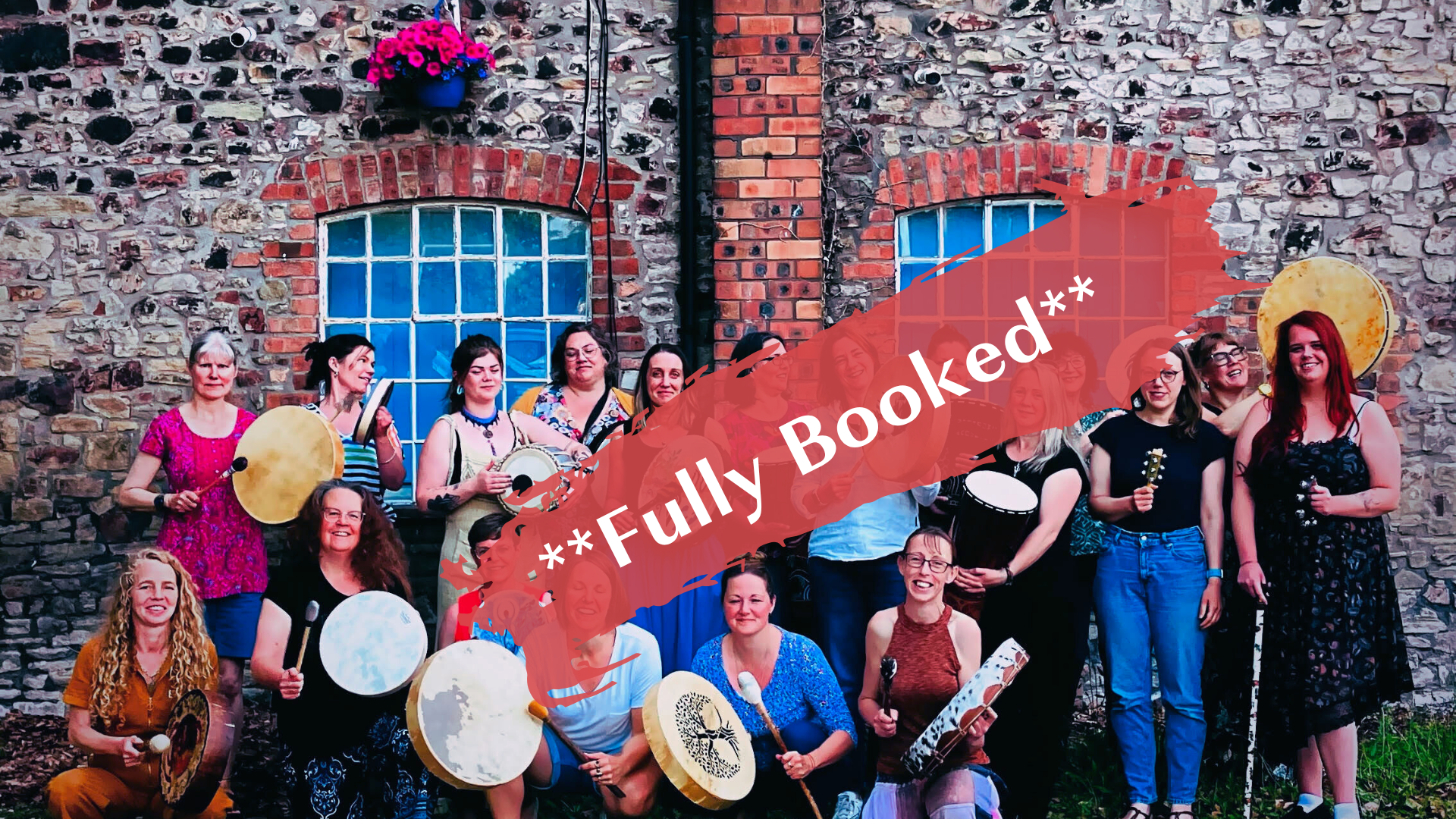
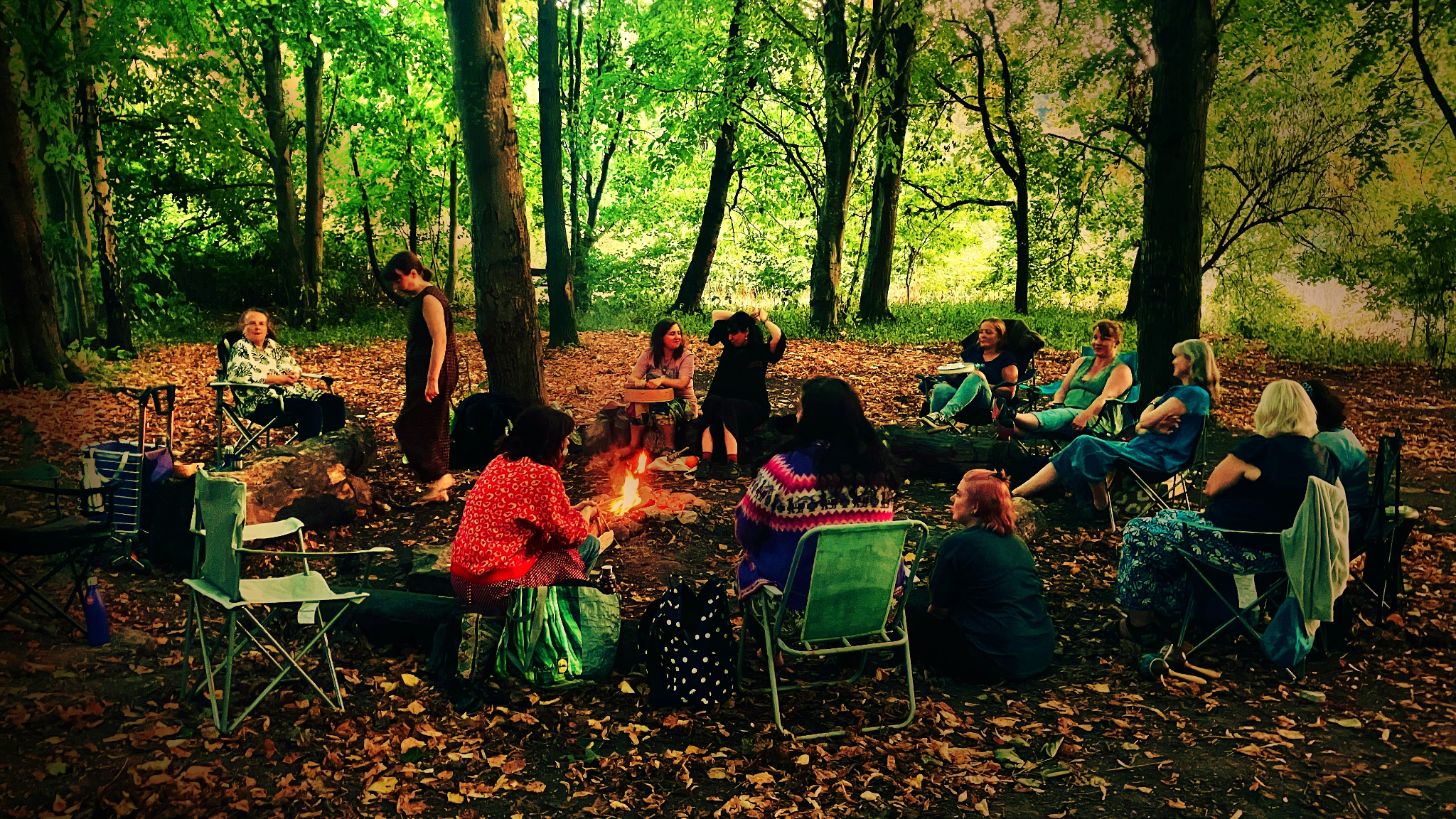
A recent Selkie Circle for women
This work isn't for everyone. And that's okay. If you're looking for gentle and soothing, if you want a space that feels like a warm bath, there are beautiful offerings for that.
But if you're ready to feel, really feel, the things you've been carrying. If you're done performing your healing and ready to actually do it. If you changes at the level of bone and blood and breath.
Then you need a container strong enough to hold that. This is the work we do in circle. Body-based, deeply rooted in Celtic wisdom and land, and built on the understanding that women are stronger than we've been told. That we can feel it all. That we don't need to be protected from our own depth.
We just need the ground to stand on while we find it.
All testimonials are from participants in the Autumn 2025 Morrighan Circle