Ancestral Healing: Why grief & joy belong
What if you don't have to choose between feeling your grief and claiming deep connection to life? What if they need each other?
We're taught to see grief and vitality as opposites. Process the pain, then move into the light. Shadow work first, then aliveness. As if one must end before the other can begin.
But what if your body already holds both? What if the grief you carry lives alongside an aliveness you've forgotten? What if you don't have to finish grieving before you can feel deeply connected to life again?
Ancestral healing invites us to discover something unexpected: grief and joy aren't opposites. They're sisters, woven together from the beginning.
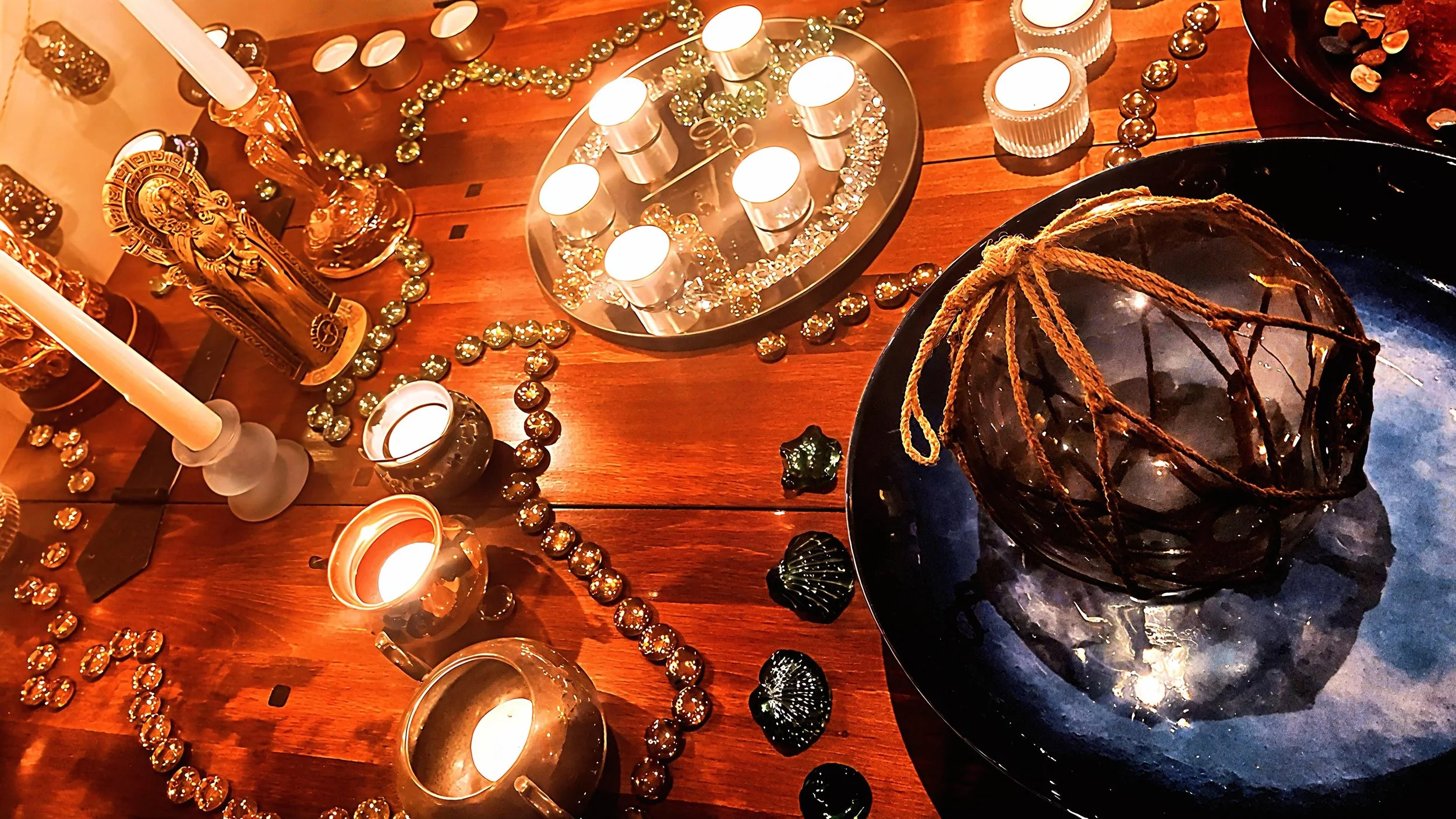
An altar from a recent women’s healing circle
What our Ancestors knew
My Irish and Celtic ancestors understood something the society we live in has forgotten: grief and deep connection to life belong together.
At traditional Irish wakes, mourners gathered for days to weep and to sing, tell stories, drink whiskey, honour the life lived. Women would keen - a ritualised lament that brought the grief up and out - while others filled the room with music, poetry, even bawdy games that celebrated life in the face of death. The atmosphere was full of both sorrow and vitality, sometimes simultaneously.
Ancient Celts went further still. They understood death as passage to the Otherworld, not an ending. Their rituals wove sacred grief with feasting, with aliveness.
Psychotherapist Francis Weller articulates this ancient knowing: "The work of the mature person is to carry grief in one hand and gratitude in the other and to be stretched large by them." Poet Kahlil Gibran wrote, "The deeper that sorrow carves into your being, the more joy you can contain."
Our ancestors didn't bypass grief to reach joy. They understood these as sisters - woven together, inseparable, each making the other possible.
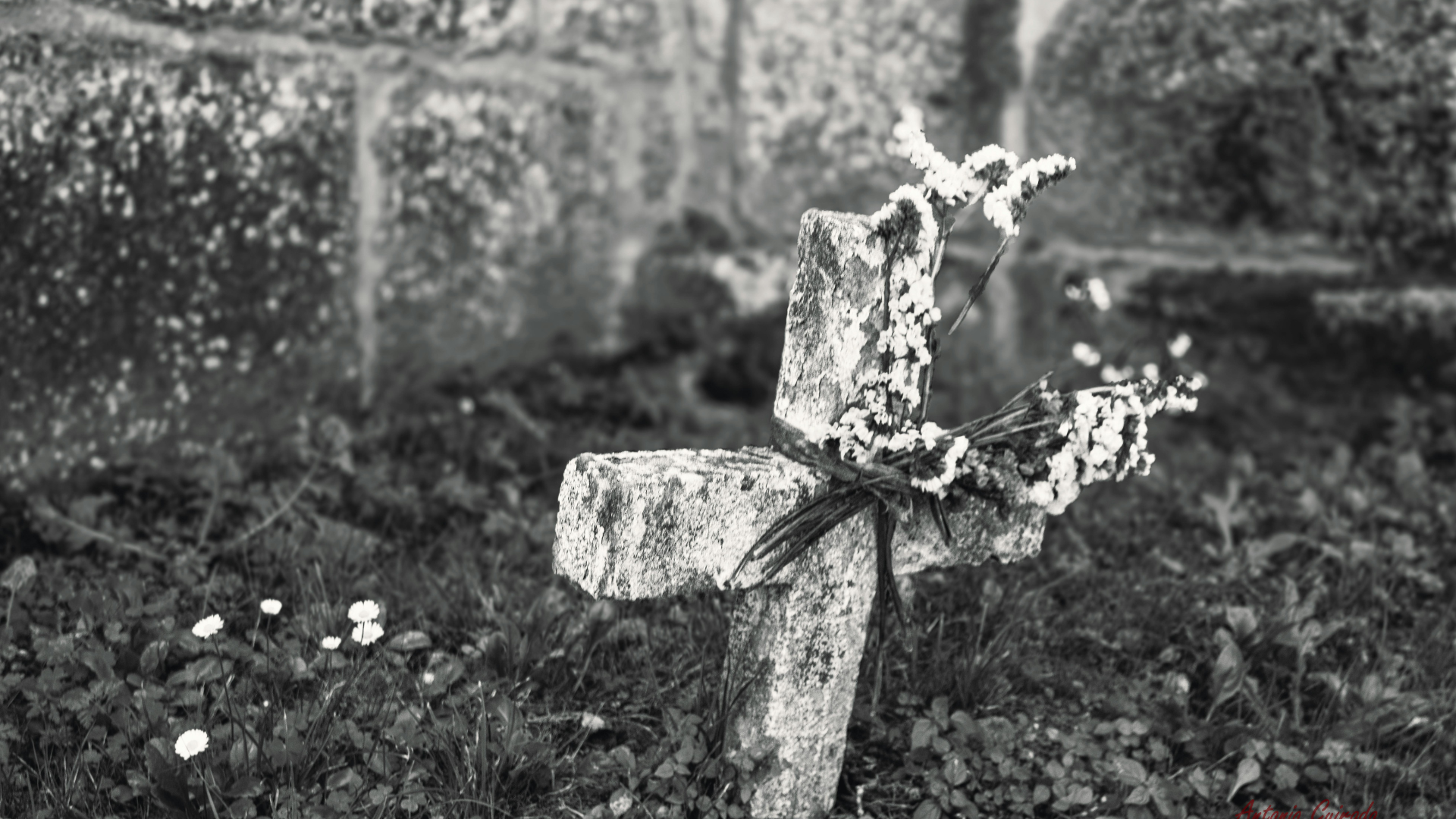
Where ancestors rest, life still blooms
When healing work needs community
I've sat in circle with women doing deep work. Many have spent years in therapy, shadow work, somatic healing, trauma processing. They understand their wounds intimately. They can name every pattern, track every trigger, explain their pain with precision.
This work is essential. As Francis Weller writes, "There is no ripening, there's no maturation without a prolonged apprenticeship with sorrow." The grief work matters. It takes time. It's meant to take time.
But something shifts when healing work becomes purely individual, purely psychological. When we process our pain in isolation, analysing it endlessly without moving it toward connection, meaning, or service to something larger than ourselves.
Miriam Greenspan names this precisely: "When we psychologise human suffering, we narrow our focus to the individual... The sense or meaning we give to pain keeps us stuck in a kind of narcissistic individualism that paradoxically fuels neurosis and emotional suffering."
“I felt my bodily feelings more intensely in a group share and it enhanced the connectedness. I am surprised I am even saying this as I usually struggle in group situations.”
The work isn't meant to stop. But it's meant to alchemise. To move through us and become medicine - not just for ourselves, but for our communities, our lineages, our world.
In circle, I’ve witnessed women who truly transform learn to hold both grief alongside a deep connection to life. They don't bypass grief to reach for vitality, and they don't stay in individualised pain-processing as if that's the whole journey. They discover that grief opens the door to aliveness, and aliveness gives meaning to grief.
They do the work in their bodies, not just their heads. And they understand healing as communal, not solitary. The video below of candles on water, are the intentions we set together at a recent circle. Ritual in community can be very powerful.
Your body already knows
Ancestral healing work doesn't happen in genealogy charts. It happens in your bones.
What if you don't need to know your great-grandmother's name to sense where unexpressed emotion might live in your body? What if your body already carries cellular memory - both the trauma and the vitality of those who came before?
When I work with women in circles, we start with what's already alive in their bodies. Where does the grief live? What does it feel like when you witness it without fixing it? And beneath that grief - or alongside it - what wants to move, to sing?
“The meditation journey to meet our ancestors was very powerful for me. The images that appeared helped me make sense of why most of the women in my family have allowed themselves to be dominated by others.”
The work is somatic because the body carries what the mind has forgotten. Your mind can convince you that you're fine. Your body knows when you're still carrying what isn't yours, and when you're ready to reach back to something older, wilder, more whole.
An online women's circle membership
A women's circle that runs online, all year. Live together every month, drum journeys and somatic meditations for your own time, ceremony at the four fire festivals, and a community to come back to in between.
Wherever you are, whenever you can come to it.
Founding members come in at £25 a month and keep that rate for as long as they stay. Opening later this year.
Why grief and joy need each other in ancestral healing
Something shifts when we stop trying to bypass grief.
You can't reach the ancient ancestors without first honouring the recent ones who carried trauma. This is likely because something in us; in our nervous system, in our sense of integrity; won't allow it. When we try to leap over our grandmother's pain to grab onto wild ancestor energy, something feels incomplete. Like abandoning someone who needs witnessing.
When you create sacred space to grieve the recent lineage and to witness their struggles, to feel their oppression while acknowledging what they carried so you could exist; something shifts. You're not processing their trauma as yours. You're honouring it as theirs, then respectfully asking them to step aside.
“From the very first session I felt held, safe and able to explore - in a healthy way - my most deeply held wounds. I am able to better manage my fears and insecurities because I have new resources, new understanding.”
This isn't "getting through" the heavy stuff to reach something better. The grief is the medicine. As Weller writes, "Grief and love are sisters, woven together from the beginning." Letting yourself feel what your recent ancestors couldn't feel creates the opening for something older to emerge.
When you do this grief work with proper support, you're completing something that's been waiting for witness. Then you can reach back to ancestors who knew deep connection to life.
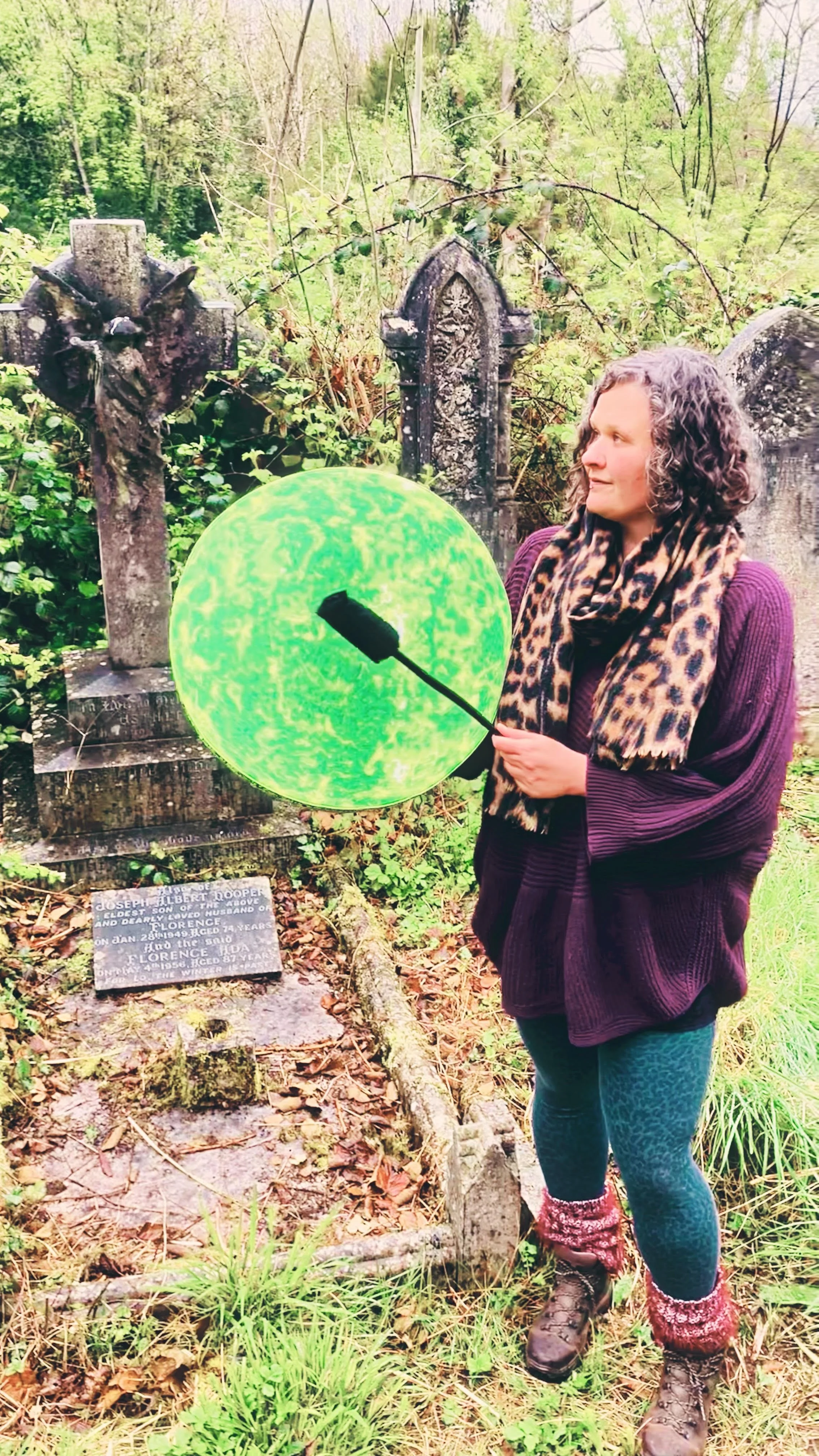
When you work somatically with ancestral healing by grieving in your body, witnessing in your body, receiving ancient vitality in your body - the changes embeds differently.
It's cellular memory awakening. Your body remembers what your mind was never taught.
As Weller writes: "When you engage grief and suffering, it breaks the heart open to joy and delight."
The grief work doesn't diminish you. It stretches you large enough to hold more - more feeling, more aliveness, more capacity for deep connection to life.
The Practice: Recent and ancient ancestors
The recent ancestors - your grandmothers, great-grandmothers, the women you may have known or heard stories about. The ones who survived wars, raised children through poverty, endured violent marriages, buried their dreams to keep families fed. They carried survival, oppression, silencing.
They did what they had to do with the limited understanding and resources available to them. We honor them. We witness their struggles and their strength without taking their trauma on as ours.
We grieve what they endured. We thank them for our lives because without their resilience, we wouldn't be here. And then we ask them, with love and respect, to step aside so we can reach further back - not to abandon them, but so they can finally rest.
The ancient ancestors who lived before agriculture, before settlements, before the specific trauma patterns our recent lineage inherited. These ancestors faced brutal realities such as starvation, illness, dangerous childbirth, short lifespans. Life was harsh.
But they hadn't yet inherited the patterns of female silencing, body shame, and disconnection from earth and community that came with settled civilisation. They lived embodied. They had strong community bonds because survival depended on it.
They maintained direct relationship with land, seasons, ritual, the sacred woven through daily life. That deep connection to life is what we're reaching back for.
Both matter. Grief work with recent lineage can support with clearing the channel. Connecting with the ancient ancestors shows what's possible when we're no longer carrying inherited patterns that aren't ours.
We don’t reject recent ancestors or romaticise ancient ones. It's about right relationship with both.
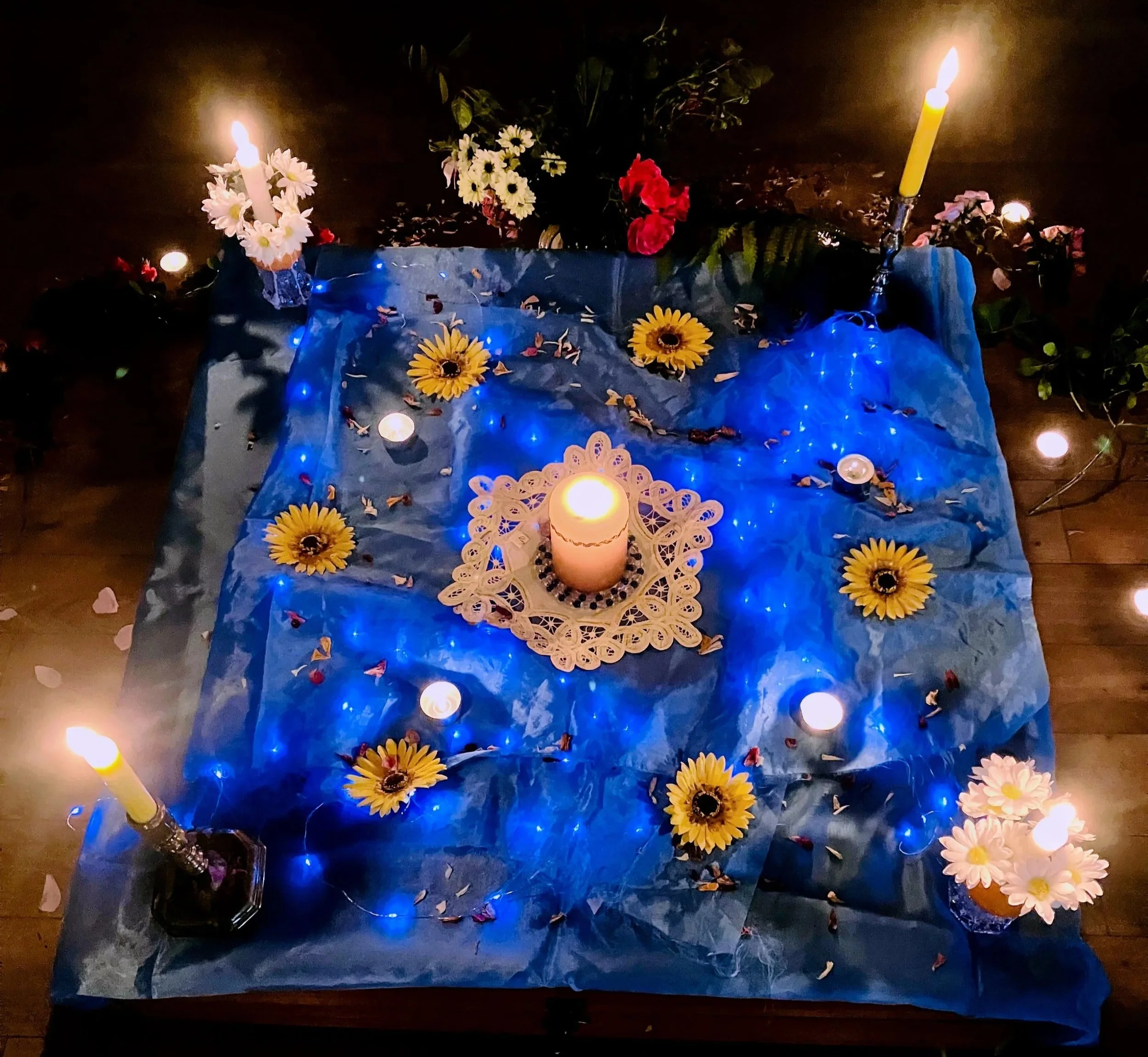
Ritual and altar work are simple yet powerful components of ancestral healing
Ancestral healing requires foundation
If you're early in your healing journey, in active crisis, or still building capacity to resource yourself when difficult emotions arise; this isn't the right time.
But if you've done significant inner work, if you understand your trauma well enough that you're ready to reach beyond it, if you have tools to hold yourself when grief arises; then ancestral work can take you somewhere shadow work alone cannot.
You don't need to know your genealogy. You don't need previous ancestral experience. You don't need to be "spiritual enough."
What you need: a foundation of healing work that gives you capacity to feel deeply without being overwhelmed. The willingness to grieve. The readiness to discover that deep connection to life isn't something you earn through suffering - it's your birthright, waiting in your bones.
An online women's circle membership
A women's circle that runs online, all year. Live together every month, drum journeys and somatic meditations for your own time, ceremony at the four fire festivals, and a community to come back to in between.
Wherever you are, whenever you can come to it.
Founding members come in at £25 a month and keep that rate for as long as they stay. Opening later this year.