Done with performance: Áine & the truth of Full Bloom
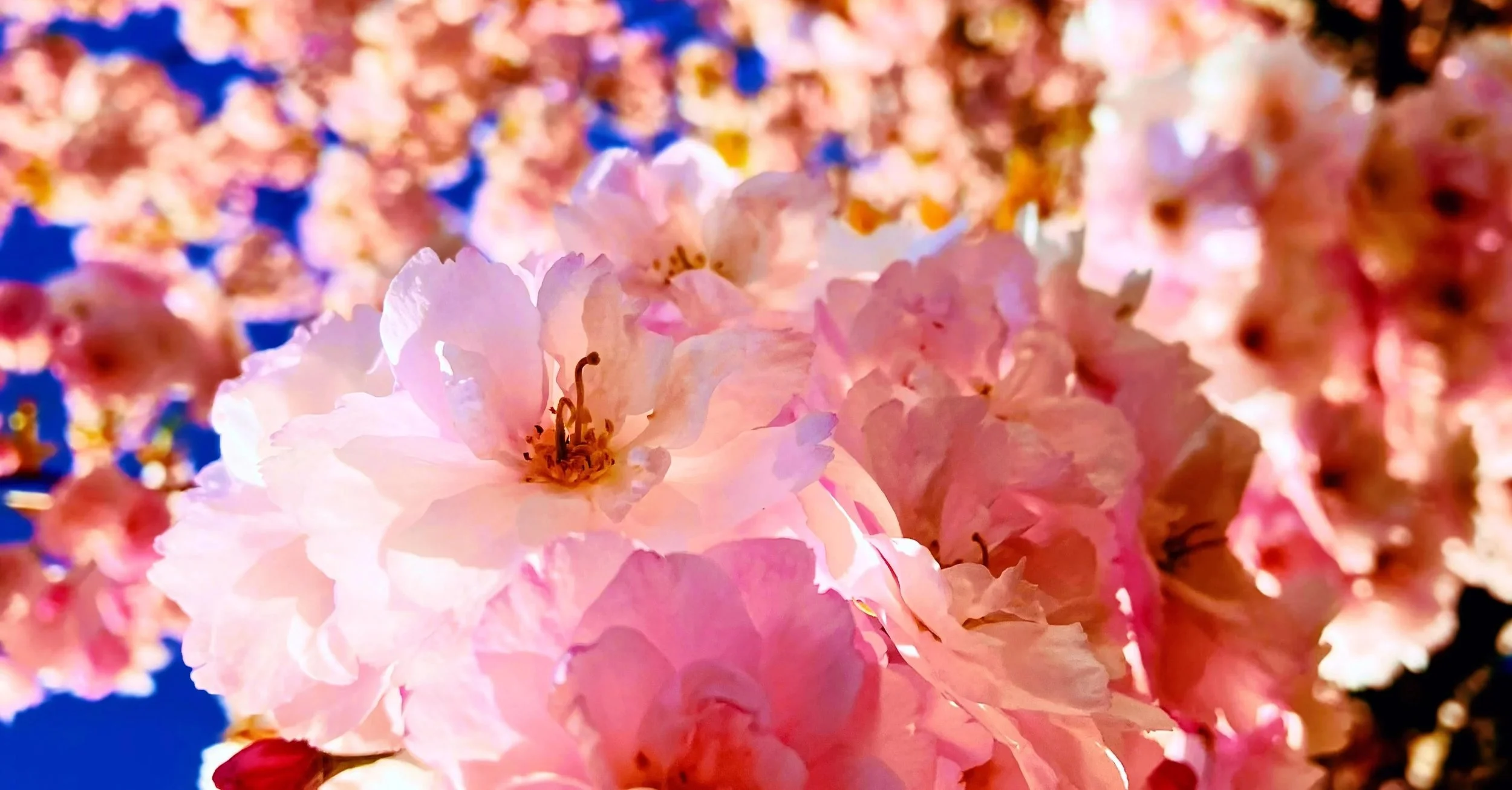
Summer arrives and somewhere inside you, there is a pressure to bloom.
To be open, radiant, abundant. To receive. To inhabit your body like it's a garden in full flower. The invitations are everywhere. Step into your goddess. Embody your fullness. Let yourself be seen.
And yet something in you goes quiet instead. Contracts. Wonders why it doesn't feel that simple.
That contraction is worth paying attention to. Because most of us have learned, over years, even decades, to override it. To perform the bloom anyway. To show up radiant when we are running on empty, to receive gracefully when we have never been taught that we are allowed to, to inhabit our bodies as though they haven't been carrying the weight of other people’s lives. Some call this just getting on with it. Your body calls it exhausting. And your body is right.
Real bloom, the kind that changes something in you rather than just dressing you in it, asks for more than willingness. It asks for the parts of you that have never been allowed into the room.
Áine, Irish goddess of summer, land, and sovereignty, knows this. Her stories are not all warmth and golden light. They carry violation, grief, fierce self-protection, shapeshifting survival. She is the fullness of summer and the woman who has lived through darkness. Not despite it. Because of it.
And perhaps that's not so far from your own story either.
Who is Áine? Ireland's goddess of summer and sovereignty
She lives in the land itself.
Áine, whose name means brightness, or radiance, is one of Ireland's most ancient goddesses. She belongs to Munster, to the golden hills of Knockainey in Limerick, to the shimmering expanse of Lough Gur where midsummer gatherings in her honour continued well into the nineteenth century. Women and men would climb the hill at midsummer carrying burning wisps of straw, walking the boundary of the land in her name, calling in the harvest, blessing the cattle, honouring the earth's capacity to give.
She is a goddess of sovereignty, which in the Irish tradition means something bodily and specific. The land isn't just hers to govern. The land is her. Its fertility, its seasons, its capacity to nourish or withhold, all of this moves through her. To be in right relationship with the land, you have to be in right relationship with her.
And she is extraordinarily sensual. The summer hills warm under her attention. There is pleasure in her world, abundance, beauty, the particular golden quality of a long Irish evening in June when the light seems to come from inside the grass itself. She invites you into your senses. Into your body. Into the sheer animal fact of being alive in summer.
It would be easy to stop there.
To make her a goddess of pure light and warmth, a midsummer postcard.
But Áine's stories don't let you.
Áine's dark stories and why they matter
There is a story, in which Áine is violated by the King of Munster, Ailill Ólom. She takes his ear in her teeth and marks him permanently, and his name ever after means "bare ear," a name that carries her refusal in it. She curses his line and moves on. She remembers, and the land remembers with her.
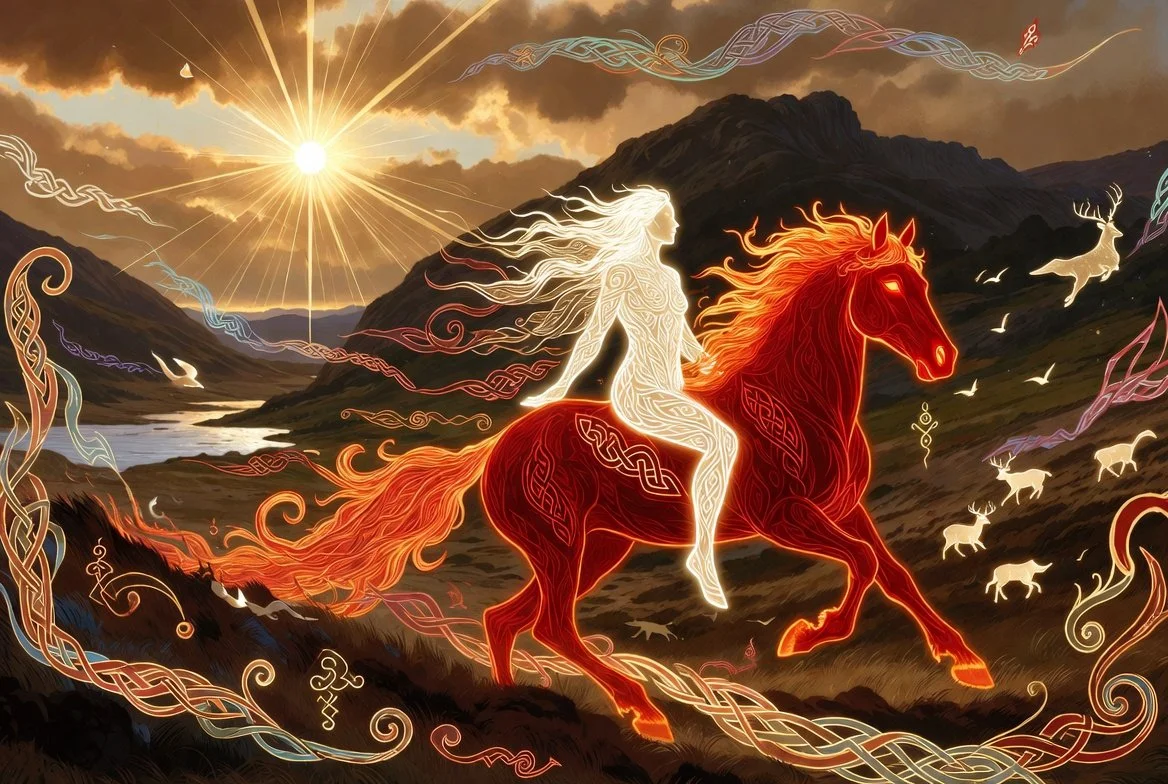
And then there is the red mare. Áine who cannot be outrun, who shapeshifts into a mare so swift and wild that no man can catch her. She will not be possessed. She will not be tamed into someone else's story. She moves through the land on her own terms, ungovernable, untameable, belonging entirely to herself.
Whatever their origins, these stories found their way into women's hearts and stayed there. Told and retold, celebrated at midsummer gatherings for centuries. Women recognised something true in them. Not despite the darkness. Because of it.
And we do not need our goddesses to be unblemished. We need them to have lived.
“Every week, I was taken on a journey. Each session was so rich, embroidered with stories and invitations.
I felt so inspired, empowered and cared for.”
The Woman who tended everyone else first
I spent most of my adult life not knowing who I really was.
I was the fixer, the one who appeared to have it “all together”, who held space for friends, who put everyone first, who organised myself so completely around others that the question of who I actually was underneath all that caretaking simply never had room to arise.
Perimenopause, which can arrive like a kind of stripping back, began to ask the question I had been too busy to ask myself: What do I want? And slowly, imperfectly, I started putting my own needs first.
Friends fell away. Some relationships, it turned out, had been built on my willingness to be endlessly available, endlessly the holder, never the one held. When I stopped, they couldn't find their footing with me.
And what I felt was not one thing. It was grief, yes, for those friendships, work relationships, romantic partners, for the years spent organising myself around others.
For the woman I had been who gave so much and didn't know any different.
But it was also relief, and loneliness, and a strange unexpected spaciousness.
Underneath all of it, something felt almost like coming home to a house I had never actually lived in.
I began to want my own peace. My own contentment. My own unhurried days. A life lived from the inside rather than performed from the outside.
I understand now that the medicine I carry, the capacity to hold space for women in deep work, was partly forged in that wound. All those years of tending others before I knew how to tend myself.
I don't regret them. But I am no longer available to disappear inside them.
“I’ve become more confident and able to articulate thought and feeling by tuning into my body and its holistic knowledge.
Not just intellectualising.”
Why full bloom in summer can feel hard sometimes
Most women I know arrive at summer already exhausted.
Because they've been giving all year. Holding everything together, keeping everyone else afloat, running on the particular fuel of women who have learned to put themselves last.
And then the world says: now bloom. Now radiate. Now step into your fullness.
No wonder something contracts.
Real bloom, the kind Áine embodies, isn't another demand on an already depleted woman. It's what becomes possible when you finally, slowly, begin to come back to yourself. Not performing. Not producing. Just inhabiting.
That's the work. And it's one of the most countercultural things I know.
Bone Deep Áine: A women's healing circle
This is why I created this circle.
Not another invitation to be more, do more, radiate more. But a space to ask a different question entirely: what would it mean to actually live inside yourself? Not the self you perform for others. The one underneath. The one who has been waiting.
We will sit with Áine's stories, the golden warmth and the darkness and the fierce ungovernable mare. We will bring our own stories and we will do the bone deep work, of coming home to ourselves.
This is embodied work. We come back to ourselves through the body, through breath, sound, journeying, movement and voice.
“I feel like I have a sovereignty that I was waiting to step into.”
Áine didn't wear a flower crown. She bit off a king's ear.
If something in you recognised itself in these words, if that contraction at the start felt familiar, if you are tired in the way I was tired and something in you is ready to turn toward yourself, this circle is for you.
It is for women who are done with the performance and ready for the real.
“I love the way Ruth facilitates, moving between boundary settings and more vulnerable sharing. Modelling courage and open heartedness with no bullshit but lots of wisdom and humour.”